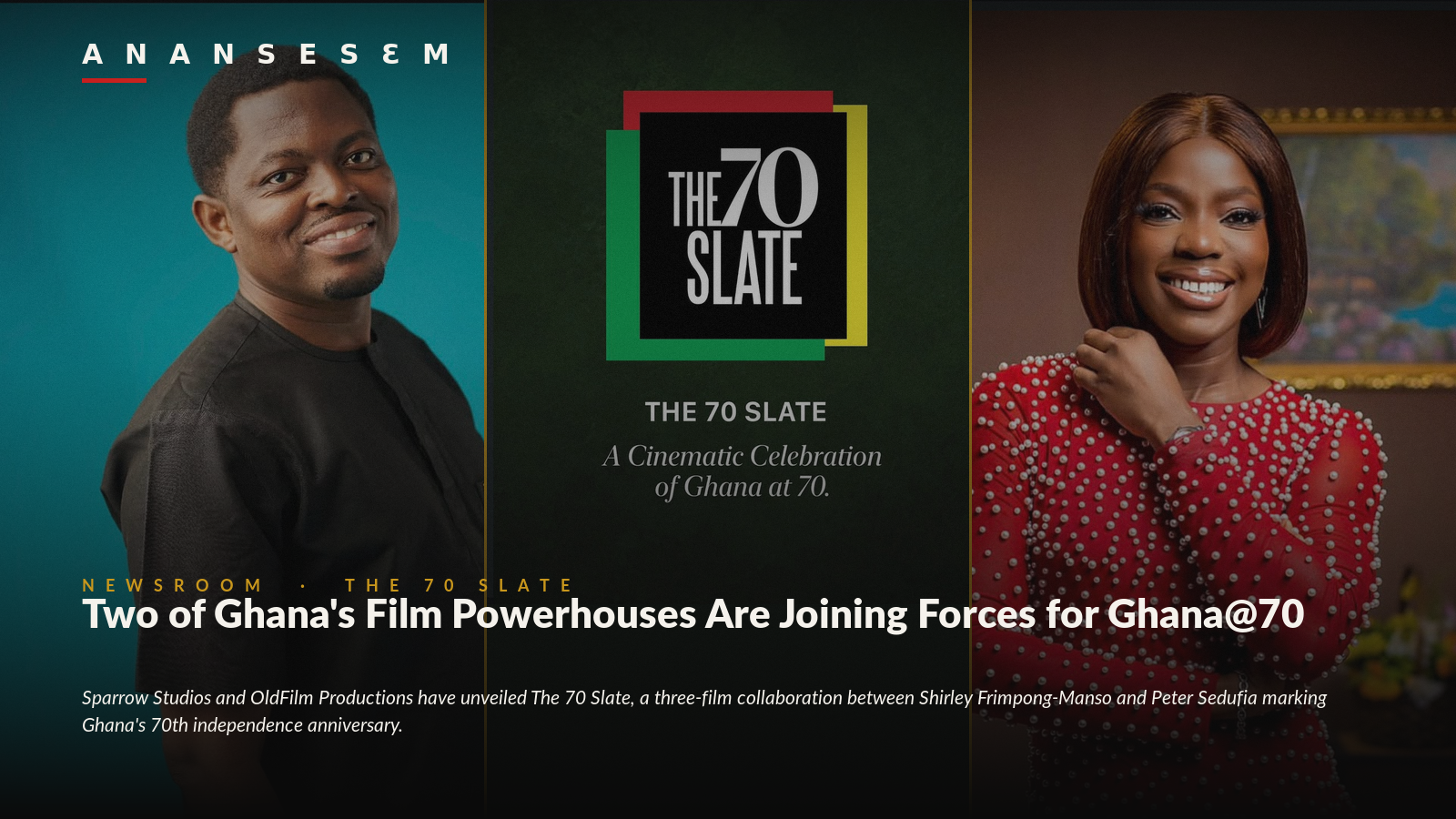
Sparrow Studios and OldFilm Productions unveiled the collaboration on September 8 at the Labadi Beach Hotel in Accra: three films under one title, The 70 Slate: A Cinematic Celebration of Ghana at 70, arriving between December 2026 and December 2027 under the joint direction of filmmakers Shirley Frimpong-Manso and Peter Sedufia.
The first, The Return of Makunse, opens in December 2026 and explores migration, broken promises and the illusion of a better life in the diaspora. It will be followed in July 2027 by Nkrumah’s Red, Gold and Green, a historical drama set during the final 24 hours before Ghana declared independence in March 1957. The slate closes in December 2027 with a contemporary remake of I Told You So, the Ghanaian music-comedy classic.
Together, the three films are meant to trace where Ghana came from, where it is now and where it might be heading. Sedufia said the collaboration began with a conversation last year, when he approached Frimpong-Manso about working together, on the belief that combining their creative strengths could produce something neither studio would make alone.
Sparrow Studios has built a long-running body of work across Ghanaian film and television under Frimpong-Manso; OldFilm Productions, founded by Sedufia, has developed its own filmography across comedy, drama and contemporary Ghanaian stories. The two are producing the slate together with Ken Attoh and Araba Sedufia, alongside executive producers Dede Chancellor, CEO of Chancellor Productions Africa, and Selassie Ibrahim, CEO of Smartys Production.
The cast announced so far includes Adjetey Anang, Joselyn Dumas, Fella Makafui, Lydia Forson, Naa Ashorkor, Kwame Dzokoto, Augustine Abbey, Kojo Boakye, Priscilla Ahiable, Araba Sedufia and British-Ghanaian actor Frederick Yeboah, among others. Casting is still ongoing.
Representatives of the National Film Authority, the Ministry of Tourism, Culture and Creative Arts and the Diaspora Affairs Office of the President attended the launch. The NFA has pledged support around facilitation, regulatory clarity, classification and visibility for the three films, while Frimpong-Manso has pointed to global distribution and stronger diaspora engagement as priorities the producers have also linked to tourism and Ghana’s wider creative-industry ambitions.
For Ghanaian cinema, the most immediate story is the collaboration itself: two established companies choosing to put three projects under one banner as the country prepares to mark 70 years of independence. The first film arrives in December.