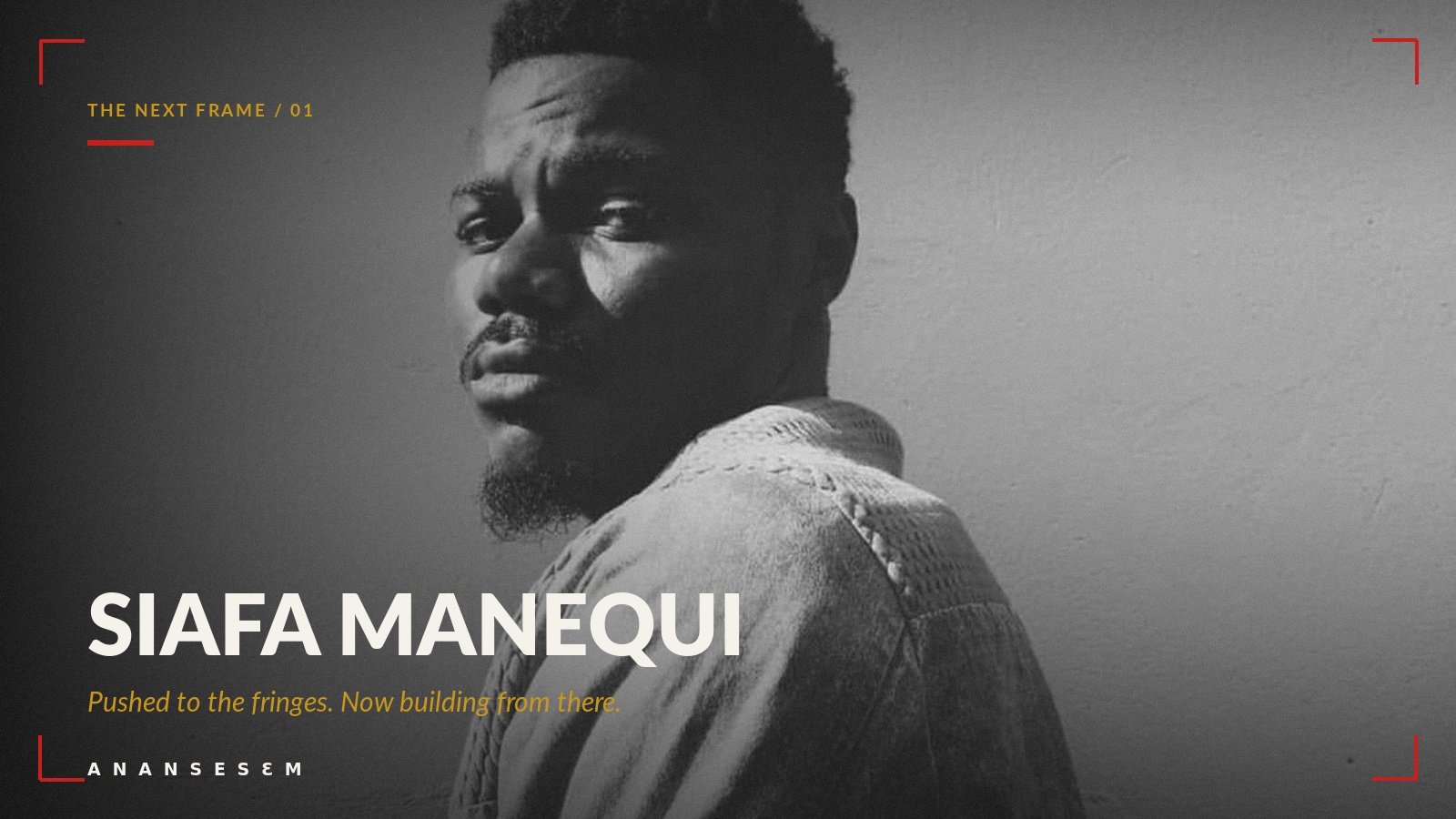
Siafa Manequi is a Ghanaian filmmaker with Liberian and Sierra Leonean heritage, largely self-taught, and drawn from the start to the material other people look away from: identity, mental health, sexuality, grief. He has made a run of short films and documentaries that sit at the edges of the industry rather than its center, by circumstance at first and now, increasingly, by choice. This piece is about how he got pushed there, what he found once he arrived, and the debut feature he is now building from that vantage point.
In through writing
As a teenager, Manequi discovered world cinema, and it reordered how he thought about the medium. The auteurs he encountered in that period “have remained a guiding light in how I understand cinema and storytelling.” He came into filmmaking through screenplays first, writing being his earliest way of engaging with the craft, before gradually moving into directing short films and documentaries and building his own voice from there.
What he keeps returning to
Manequi’s work returns again and again to the same terrain: identity, mental health, sexuality, grief, loss, resilience, human relationships. Butterfly’s Sting explores transgender identity and mental illness. Adwuma (Hustle), a guerrilla-style documentary made with German cinematographer Dario Wendt, looks at work, survival and dignity. A commissioned documentary set in Agbogbloshie examines e-waste and environmental injustice through the people living and working inside it.
What connects the films isn’t genre so much as a recurring interest in people whose experiences are often misunderstood, and how society, family and environment shape who they become: “I’m interested in belonging, survival and the human experience from an African perspective,” he says, “often allowing realism, surrealism and ambiguity to coexist.”
The turning point
If one project marks a shift, it’s Adwuma. Working with minimal resources pushed him toward a more instinctive, intimate and guerrilla approach to filmmaking, one built on responding to real people and real environments rather than leaning on a conventional production structure. Its selection at the Uncolonial Film Festival in Münster, Germany, confirmed something he needed to know: that locally rooted stories can travel. Adwuma didn’t just teach him a method. It confirmed the method was worth keeping.
Pushed to the fringes
Manequi is direct about where the harder lessons came from. Access, funding and sustainable opportunity have been the biggest obstacles to his career, and early on he was taken advantage of, an experience that pushed him “further toward the fringes of the industry.” He doesn’t describe that position as a defeat. If anything, it sharpened him: “being on the fringes has also made me question its structures and imagine something more honest and sustainable.”
The next frame
Manequi is now developing his debut feature, In the Mist, a surreal crime drama set in Agbogbloshie. The screenplay is finished, and he is in the fundraising stage, with casting, training and production still ahead once financing is secured. Alongside it, he is writing a Ga-language short centered on a man living with schizophrenia.
He is looking specifically for producers, funders, film companies and international partners with an interest in independent African cinema and filmmaker-driven work, a search he frames as continuous with everything else he has built: “I want the next stage of my career to be about building a body of work and making films on my own terms.” He wants to build a sustainable career, he says, “without losing my honesty, creative freedom and curiosity.”
A Gofund me has been set up to raise funding for the project. Kindly visit https://www.gofundme.com/f/support-in-the-mist-siafa-manequis-debut-feature-ghanahttps://www.gofundme.com/f/support-in-the-mist-siafa-manequis-debut-feature-ghana
What he wants to change
Asked what needs to shift in Ghana’s film industry, Manequi’s answer is structural rather than personal. Screenwriters are undervalued and underpaid, sometimes given two or three weeks to write a feature, leaving little room for research or real character development. Older actors and film workers reach later life with no reliable pension, healthcare or welfare system to show for the industry they helped build. And industry workers who might speak up about unfair treatment often don’t, for fear of being blacklisted.
As he puts it plainly: “We need development funding, fair pay and better protection for young actors, writers and other crew members.”
What he wants isn’t sympathy for any of this. It’s more people willing to say it out loud: “we also need rebels, people like Leila Djansi, who are willing to challenge the status quo and speak uncomfortable truths.”
What’s outside his control
For Manequi, all of it traces back to one experience: being taken advantage of early in his career, and the fringe position that experience pushed him into. He has made that position into a vantage point rather than a limitation, one clear-eyed enough to keep questioning the industry’s structures while he builds inside them. What he says he wants next isn’t a single successful film. It’s a body of work, and an industry patient enough to let more than one exist.